Welcome to another installment of The Diary Of An Antiquer! Thanks for tuning in again.
For chapter three of the blog we are going to take a look at something that, not too long ago, was used in and around homes, gardens, farms and more all over the world. Because of its unique design and fascinating connection with World War II, this item has been one of my favorite antique-finds for awhile now.
Let me introduce you to: The Black Flag Bug Sprayer.
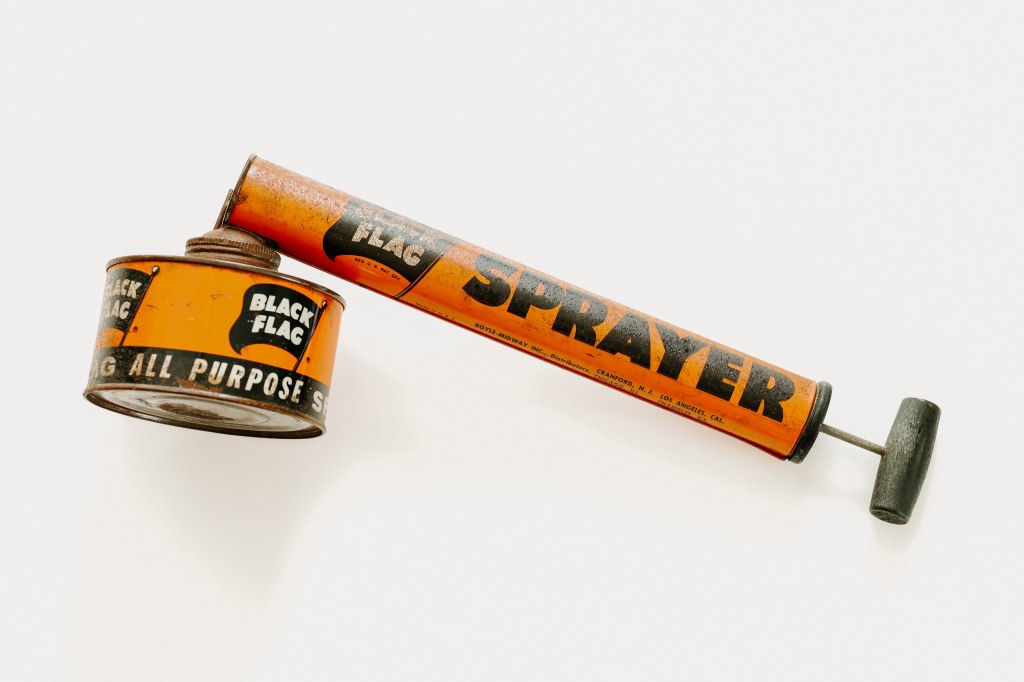
I found this retro repellant at Antiques USA in Arundel, Maine a couple years ago and have treasured it ever since for a number of reasons. To start: it’s a mid-20th century, flit gun bug sprayer from Black Flag, the oldest pesticide company in the country. The longtime insecticide brand, which claims to have sold its first product in 1833, has changed ownership a bunch of times, and is now owned by Spectrum Brands—who have yet to return my messages.

Manufactured by home-goods company Boyle-Midway Household Products Inc., this bug-sprayer was one of the larger models produced by Black Flag, and was distributed out of plants in New Jersey, Illinois, Georgia, and California following the conclusion of World War II—when the DDT-craze swept (or sprayed?) across the globe.
Back in its heyday, flit gun sprayers like this one were used for treating residential, commercial, or military sites with DDT (dichloro-diphenyl-trichloroethane)—a powerful synthetic insecticide first synthesized by Othmar Zeilder in 1874 and then used on insects by Paul H. Müller in the late 1930s. Areas with high-populations of lice, mosquitoes, fleas, rats and bed-bugs were sprayed in an effort to stop lethal illnesses like typhus, malaria, and dysentery from spreading to soldiers and civilians.
DDT’s success on the battlefield was swift, and by the mid-1940s several epidemics both in the United States and abroad were halted, thanks to the potent insecticide. As a result, pest-killing technology became immensely popular amongst consumers, and soon ads promoting pesticides became common in newspapers, magazines, radio, and television.

The flit gun design is simple: A hand-operated pump (or “plunger”) forces air through an air-nozzle at the front of the sprayer using a pneumatic tube. Much like how a squirt gun propels water, the airflow generated from the pump moves the chemicals from the one-pint tank below—which, unlike older models, unscrews from the sprayer for easy refilling—up a small, secondary pneumatic tube, and then blown out the main air-nozzle at the front of the sprayer. When repeated, this process atomizes the insecticide, and as a result emerges as a spray or mist from the head of the device.

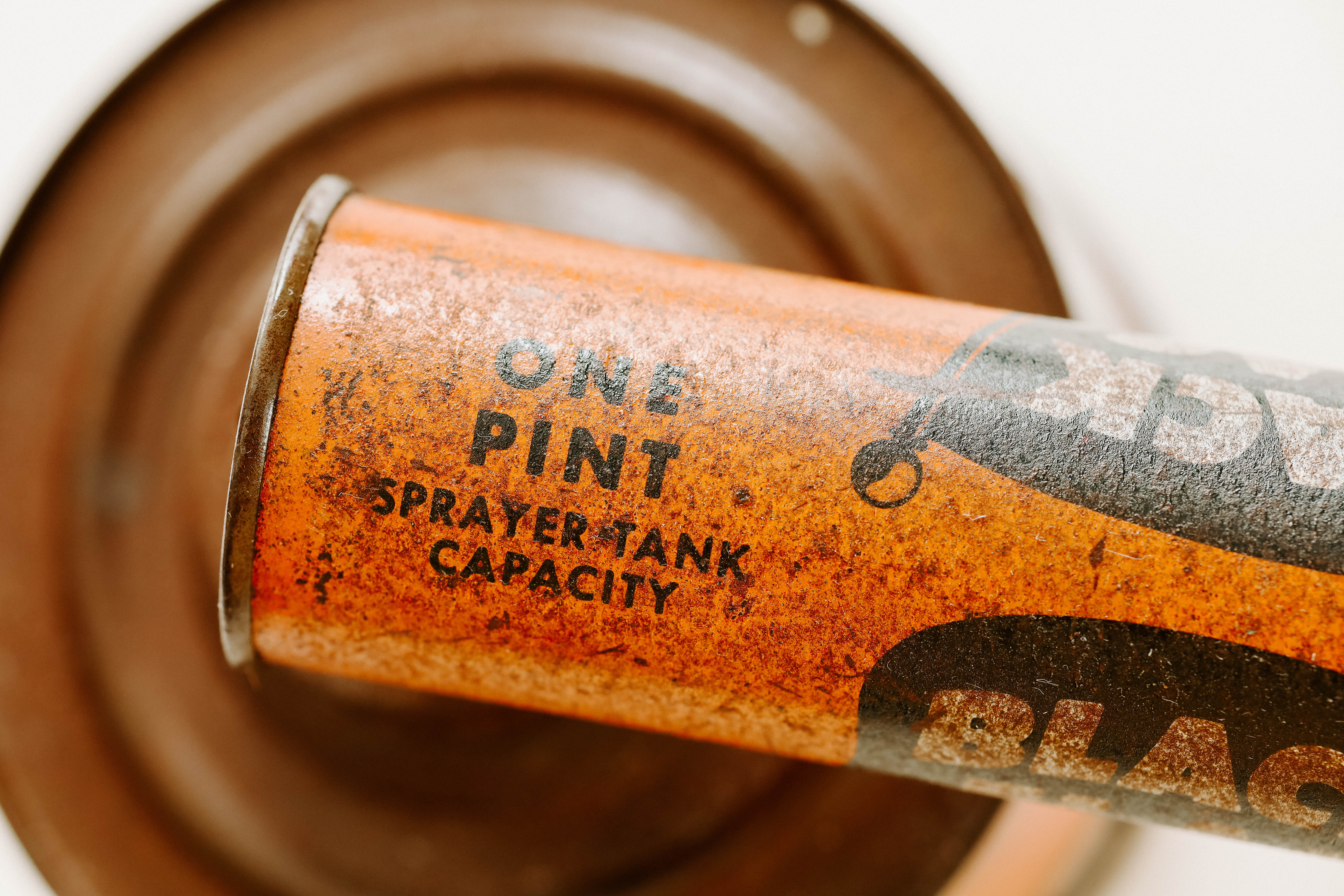
The hand-pumped sprayer gets its name from competing pesticide company Flit, who is believed to have first introduced this style sprayer commercially. Eventually the aerosol spray-can would replace this technology, and companies like Black Flag would adapt their marketing and manufacturing accordingly.
No longer afterwards, DDT was banned in the United States by the Environmental Protection Agency (EPA) in 1972 for it’s harmful effects toward humans, wildlife, and the environment. This decision was paramount for those who had raised concern over the insecticide in years prior, most notably being author and conservationist Rachel Carson—author of the influential 1962 book Silent Spring. Despite its known toxicological effects, DDT is still used today in other countries to control the spread of malaria.
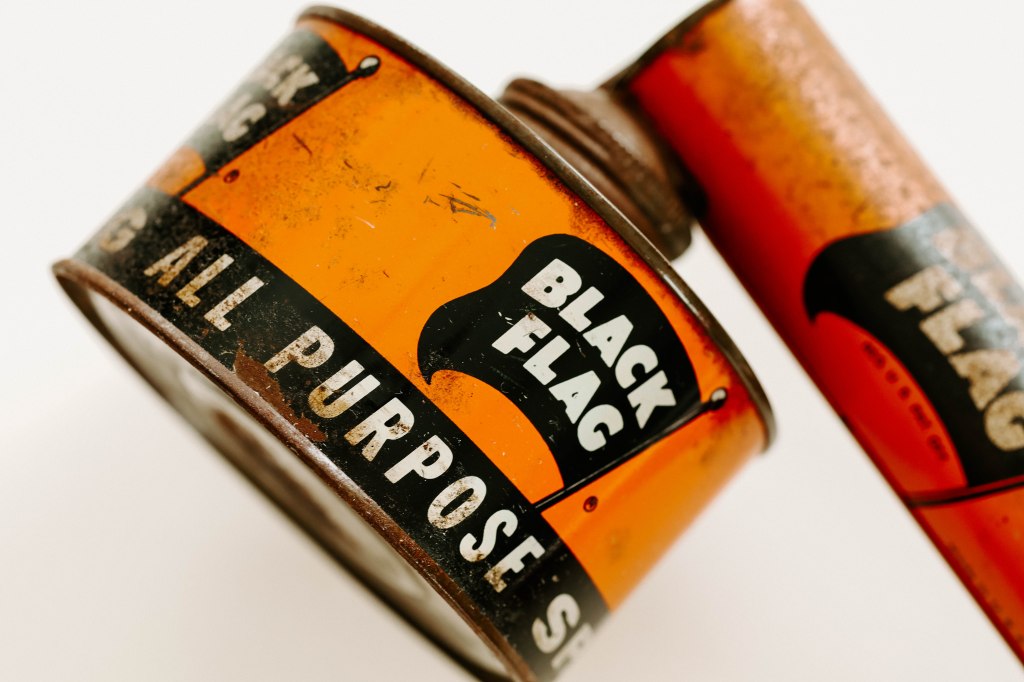
You’d be hard-pressed to find one of these vintage bug-sprayers at your local home & garden store today, but if you browse the internet or the aisles of a good antique store, you’ll surely spot one. Numerous pesticide companies like Black Flag (Hudson, Flit, Gulf, Cenol, Fly Ded) released similar products throughout the early-to-mid 20th-century, and a lot of them are considered collectibles nowadays. Because of their unique designs, connection with World War II and a now-banned pesticide, antique bug-sprayers like this one are a thrill to see.
And as always, if you have any information on this item that you’d like to share with me – feel free to comment! Watch the full video on the Black Flag bug sprayer here: Episode 3
Thanks for reading, and happy hunting.
-G
P.S. When contacted in regards to this bug sprayer, both Spectrum Brands and Black Flag did not respond.

