Hello there! Welcome to another installment of my blog-The Diary Of An Antiquer.
This past Christmas a family member gifted me something wonderful: a nearly mint-condition UARCO Featherweight Recorder!
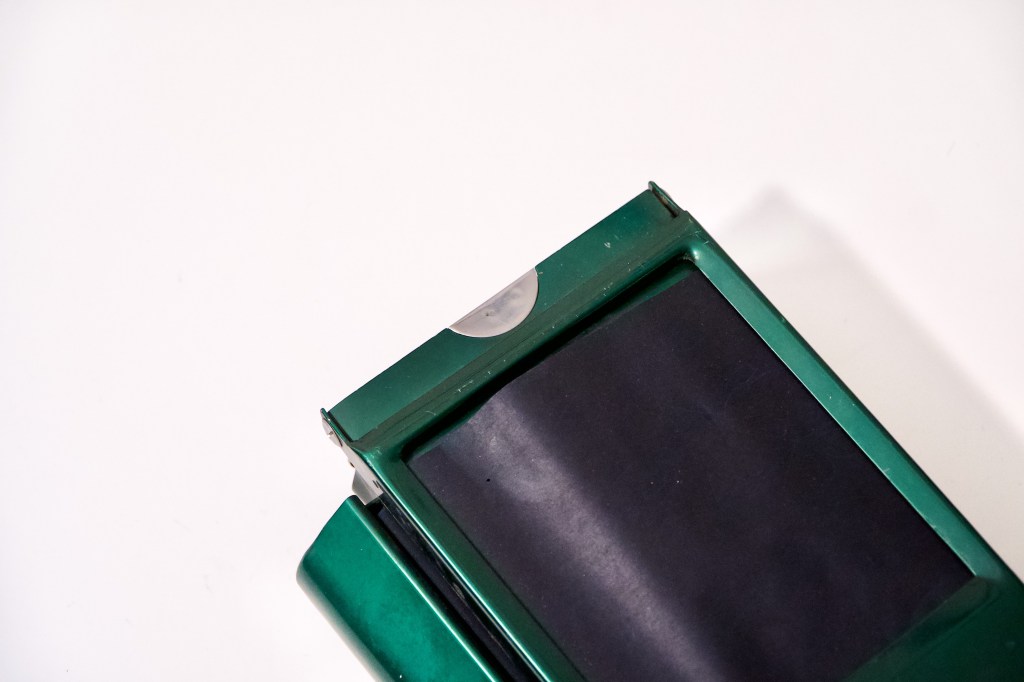
To my delight, this vintage piece-a staple in the long list of influential and groundbreaking business machines-is in wonderful shape.

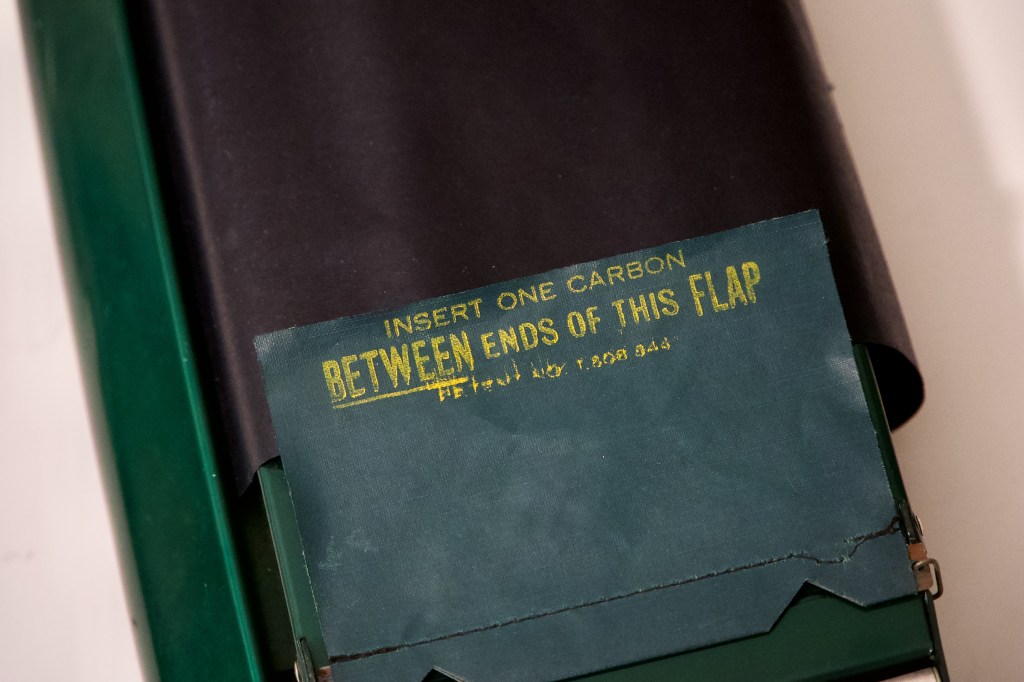
The coating of metallic, emerald-green paint (which reminds me of the color of classic cars from a bygone era) is only scuffed and scratched in a few spots here and there-and still shines in the light. The label at the top-also in surprisingly good condition given the age of the item-bares the model’s fitting slogan:
“Always ‘write’ on the job“
Before we go further, it is important to know what this thing is in order to better understand and appreciate how cool a find (and gift) this truly is.
Let’s start with this…
An ‘autographic register’ is-more or less-a business machine.
Back in the day, the most common models of these autographic registers were much larger and were designed to sit atop counters or desks within a business. This one however is small, lightweight and compact, which I’m guessing is where it gets its name-‘Featherweight Recorder’-from.
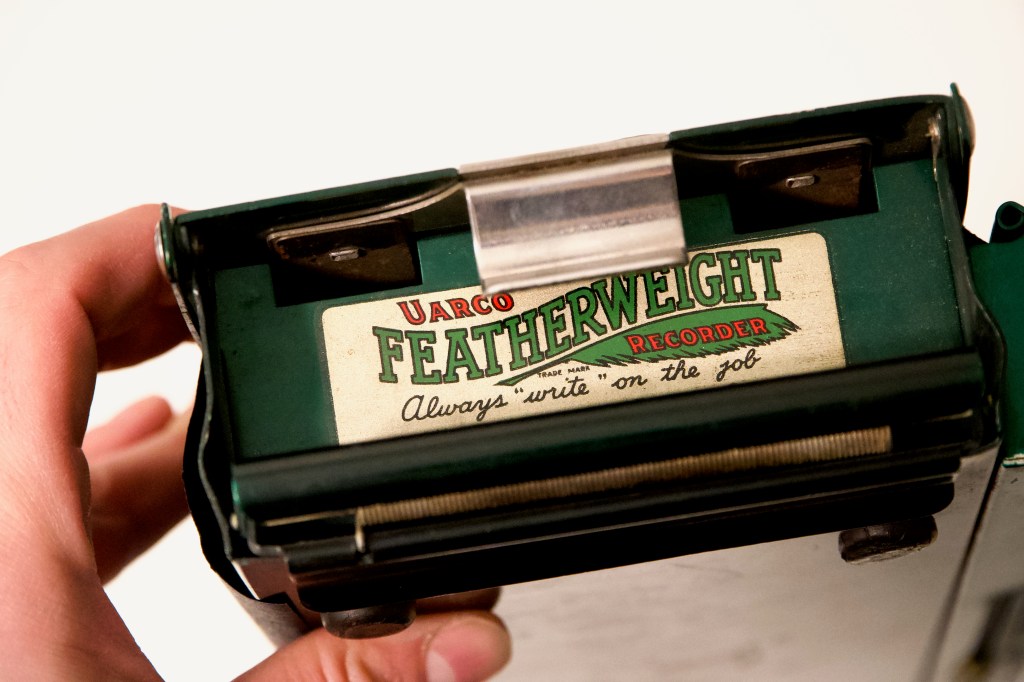
Through its simple yet genius design, the autographic register allows the user to write out a sales invoice or receipt in a flash, automatically producing a transferred-copy of the original-seemingly like magic!
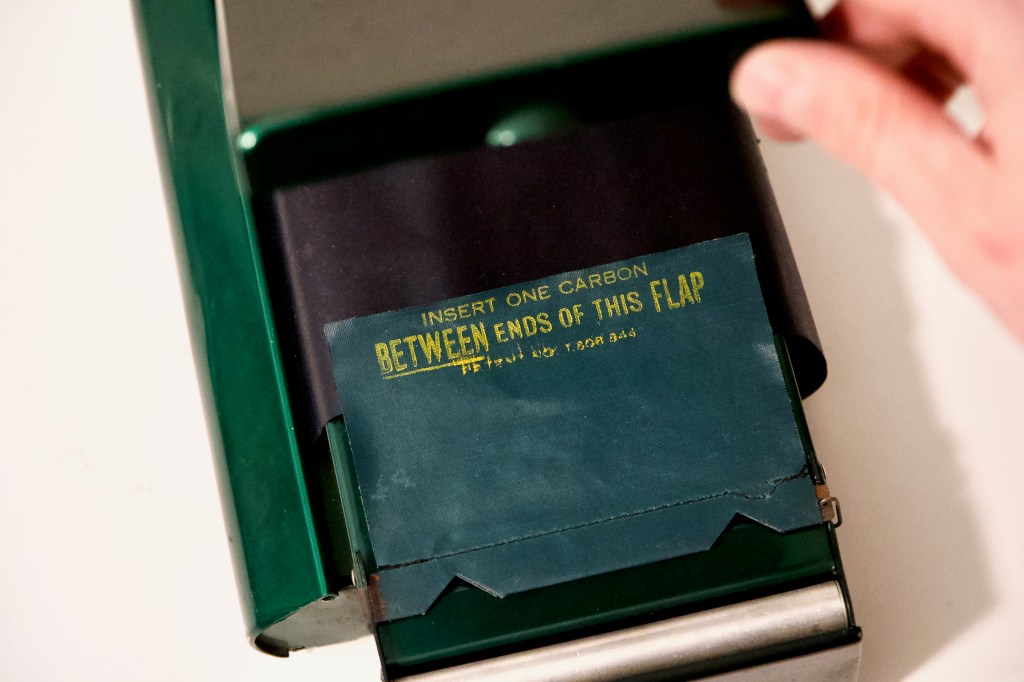
The secret to the machine’s copying abilities (yes it still works) lie in the spool of carbon paper which is cleverly secured behind a cylindrical, armor-like door that is mounted on the side. This paper (see image below) came with the machine, which was a huge bonus. Usually antique-finds like this don’t come preloaded with the paper, or ink, batteries, wiring etc. that you’d need to get the item functioning and working again. So thanks to the previous owner (more on that later) for the carbon paper!
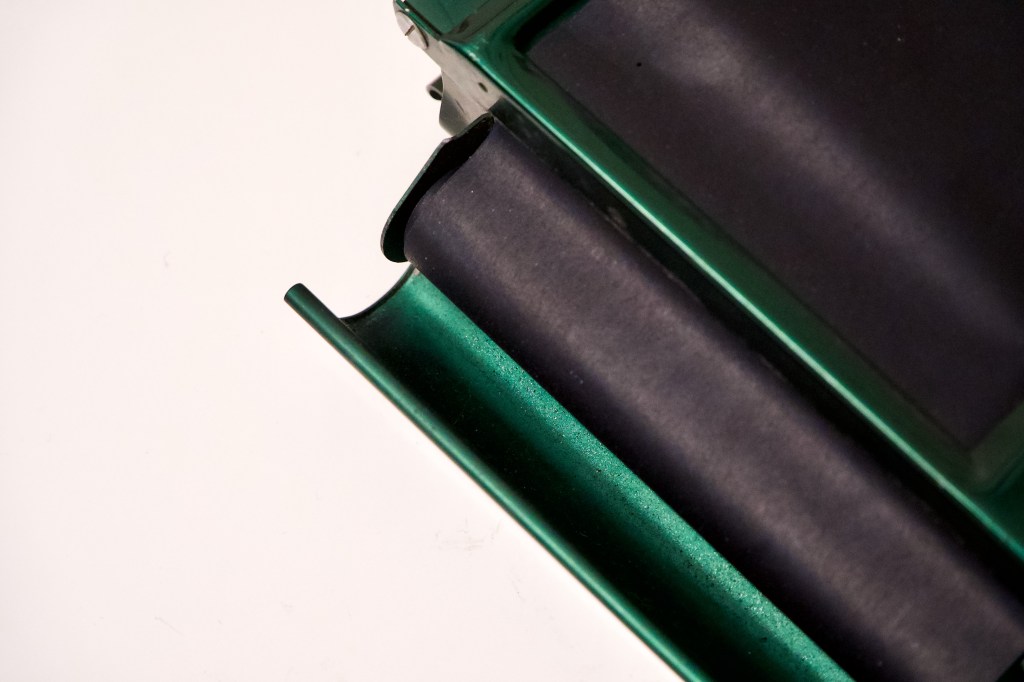
Speaking of, carbon paper is a vintage invention in its own right. Typically coated single-sided with a pigment and wax mixture, it is a thin sheet of paper designed to be sandwiched between two other pieces of paper—therefore allowing you to create an instant duplicate as you write, type, or even ‘etch’ with a metal stylus.
While Italian inventor Pellegrino Turri is credited with first-creating carbon paper in 1801 for his mechanical typing machine/one of the first typewriters which used a “black paper” much like carbon paper, most sources will list Ralph Wedgwood as the official inventor of the parchment.
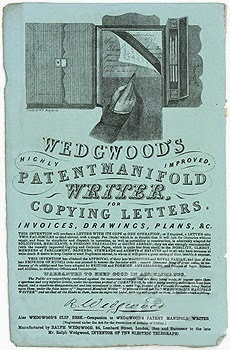
The English inventor and talented pottery artist was the first to officially file a patent for the paper in 1806, calling it an: “Apparatus for producing duplicates of writings.”
Essentially, carbon paper crawled so photocopiers could walk.
Wedgwood initially used his carbon paper to help the blind and partially-sighted write. By using it with his stylographic manifold-writer, also known as the ‘Noctograph’ or ‘Night Writer’ (which I think sounds much cooler), a user could annotate or practice their penmanship skills without the hassle of using a pen or a quill & ink.
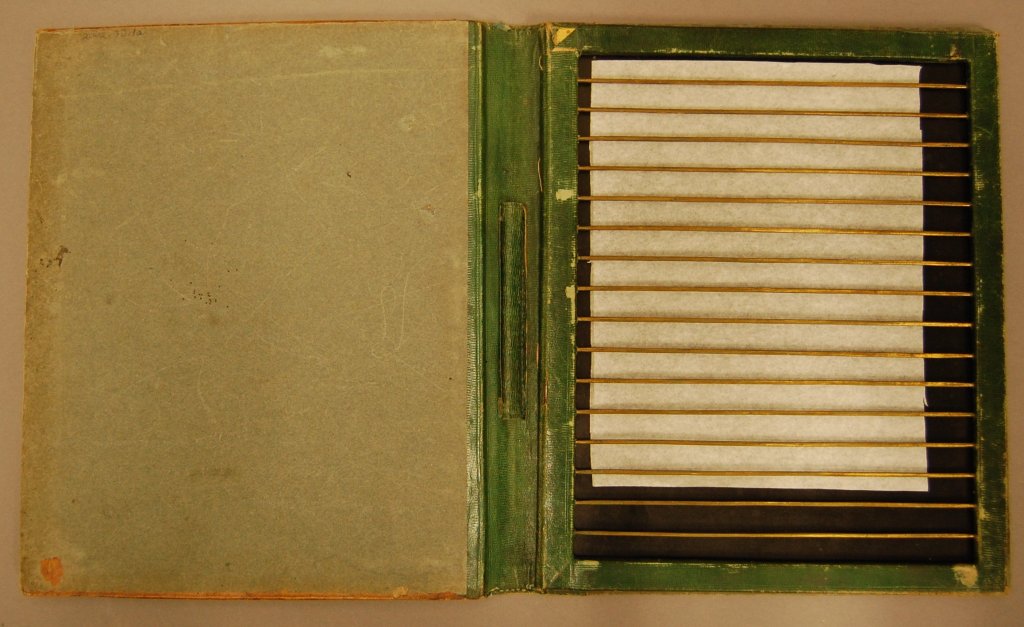
Some other fun facts about carbon paper are that: the email term ‘CC’ actually stands for “carbon copy,” which derives directly from carbon paper. Additionally, carbon paper is still in production today for the very same purposes it was back then. Small local governments use it for record-keeping in their fieldwork, dentists will use it (in the form of ‘articulating paper’) to assess a patient’s bite pattern(s), and businesses will use it for point-of-sale transactions.
“Carbon paper crawled so photocopiers could walk.“
But back to the item in question…
According to my web-sleuthing, this specific featherweight recorder I have is one of many in a long line of autographic registers. The first model(s) were much larger and…not as portable as the one I have.
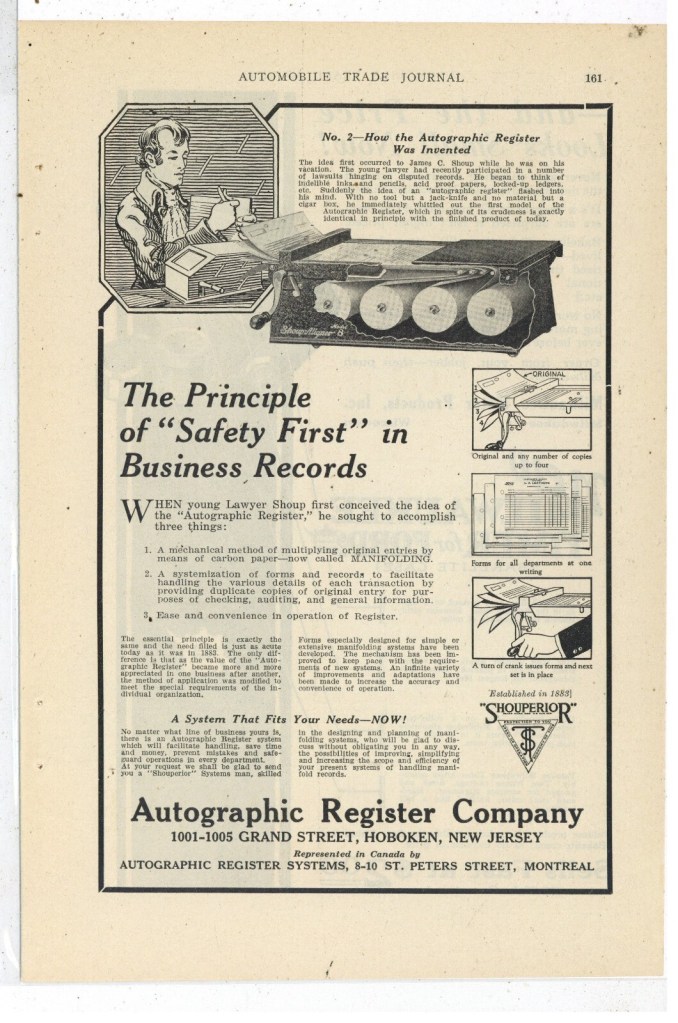
The machine itself was first invented by former Mississippi senator James C. Shoup. Its popularity and success would later inspire him to found the Autographic Register Company in Hoboken, New Jersey, where many more registers were produced.
In fact, the Manchester, New Hampshire city library has a digitized copy of an office appliance manual from 1926, which lists the autographic register under the “Early Achievements In Office Machinery” chapter for the machine’s genius.
The informative text-edited “extensively” by William H. Leffingwell on behalf of the National Association of Office Appliance Manufacturers-details nearly every then-modern development in office machinery, tools and appliances. Mentioned throughout the manual, the autographic register was (even back then) a must-have for every department within the business world: “The autographic register system’ enable the professional people to keep adequate records with a minimum of effort.” (page 52, Leffingwell, Office Appliance Manual. USA. 1926)
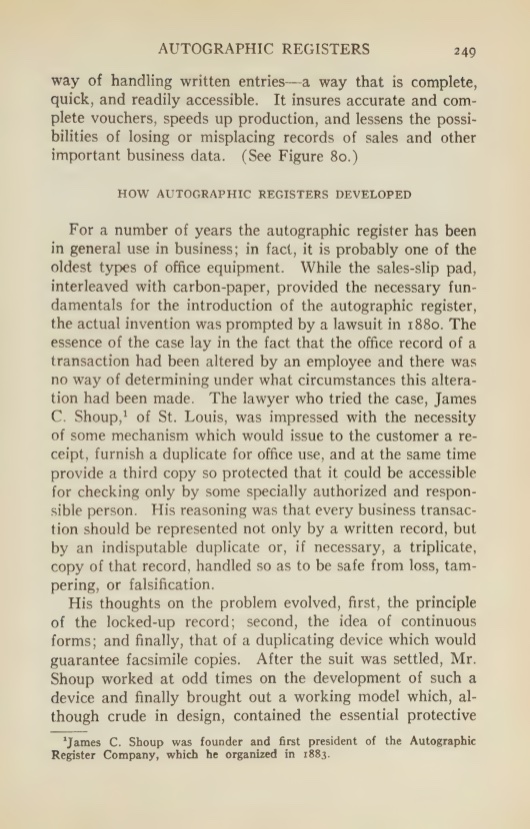
The manual even has an entire chapter (14 if you’re curious) devoted to the autographic register, and gives a much more thorough and well-written account of the pivotal piece of office equipment and its early history. Speaking of which, the story of how Shoup initially thought-up the idea to invent such a machine is quite interesting. I’ll share that page from the manual below…
As time went on, the autographic register and similar inventions had to evolve and adapt with the ever-changing business-world. The invention of the computer (printer, scanner, etc.) would change everything.
“Automation drove the business forms industry’s growth in the 1960s. The boom in computers and optical scanners helped make business forms one of America’s fastest-growing industries…” (History of Standard Register Co, for Business).
Companies specializing in this industry during this time saw immense growth as technology advanced. Businesses started to switch from using autographic registers to computers, and therefore needed a whole new set of tools. UARCO (United Autographic Register Company) was one of these business forms and document-management companies that had great success during this then-new digital age. Like other competitors during this time, UARCO specialized in printing business forms, but they also made their own line of autographic registers and other business/office tools.
“The boom in computers and optical scanners helped make business forms one of America’s fastest-growing industries, expanding at twice the rate of the gross national product, from $530 million in 1962 to $1.4 billion in 1972.” (Funding Universe)

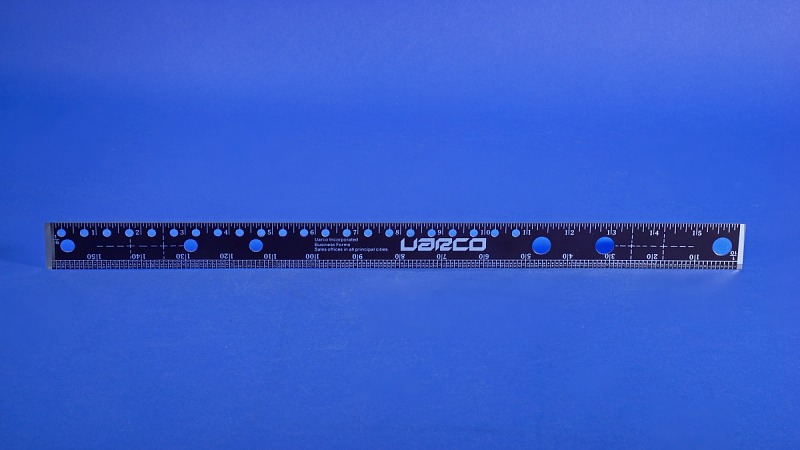
Speaking of UARCO, the Smithsonian actually has a UARCO-brand ruler in it’s collection for its help in digitizing old records, how cool!
Competing directly against the then giants-of-industry such as Moore Corporation Limited of Toronto, Canada and Standard Register Co. in Dayton, Ohio (founded by autographic register innovator Theodore Schirmer), UARCO was, “believed to be the third-largest printer of business forms in North America” (Chicago Tribune, 1988).
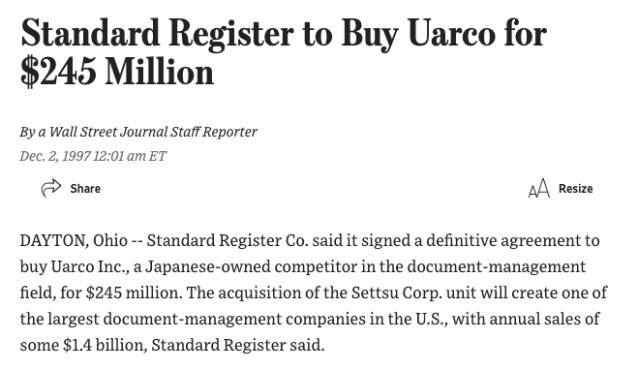
Eventually however, longtime competitor Standard Register Co. acquired the business forms and printing business in 1997 for $245 million.
Now normally this is about where the blog post would wrap up-but this is no ordinary chapter…
While I was conducting research one night-occasionally tinkering with the item in-between a long stint of editing camped out in my office-I discovered, tucked away in a small compartment, numerous old invoices and receipts from the machine’s former owner!

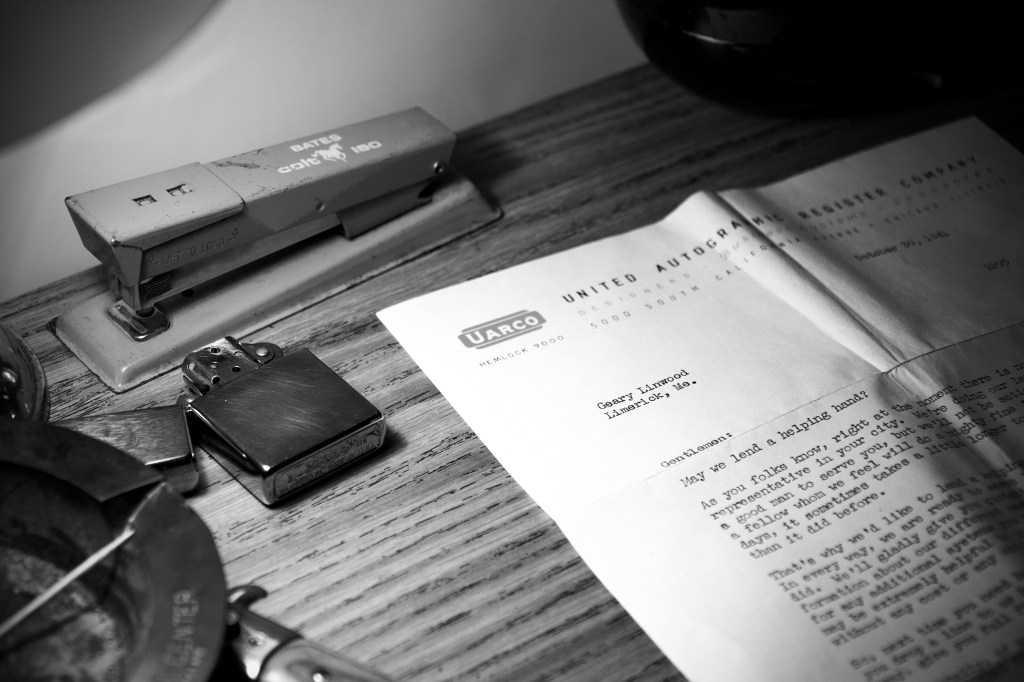
The receipts/invoices (pictured below) detail various transactions with people across southern Maine. They also note a variety of small sales-transactions and range from 1937 to 1938. Most are written in blue ink, but a handful are also done in pencil. Most of them are stamped at the top with the same name and information:
LINWOOD L. GAREY | LIMERICK, MAINE | TELEPHONE 37


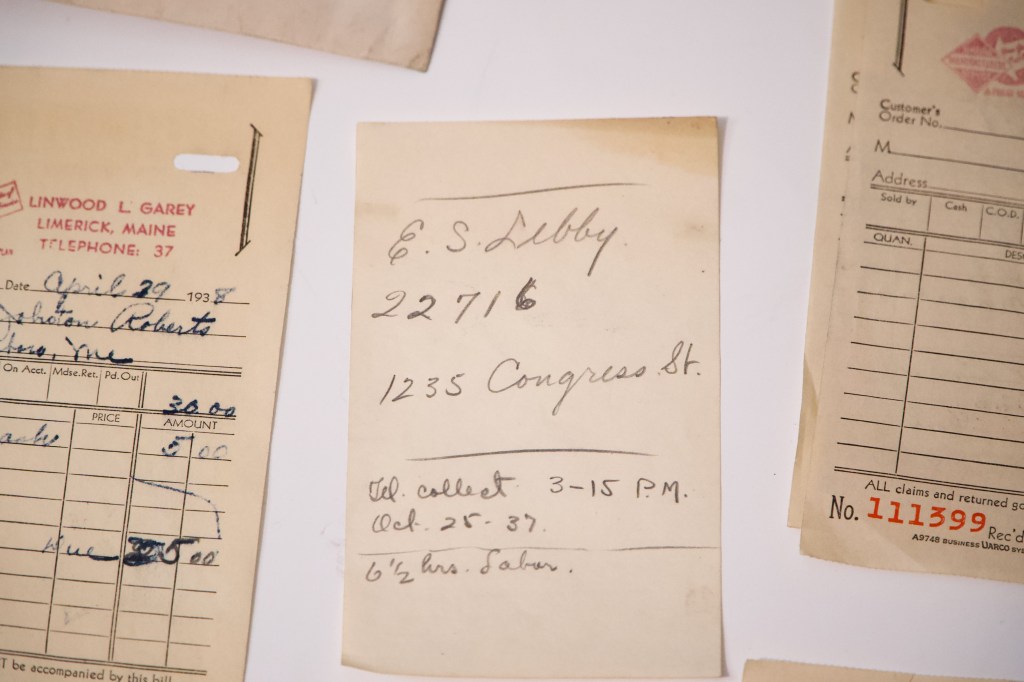
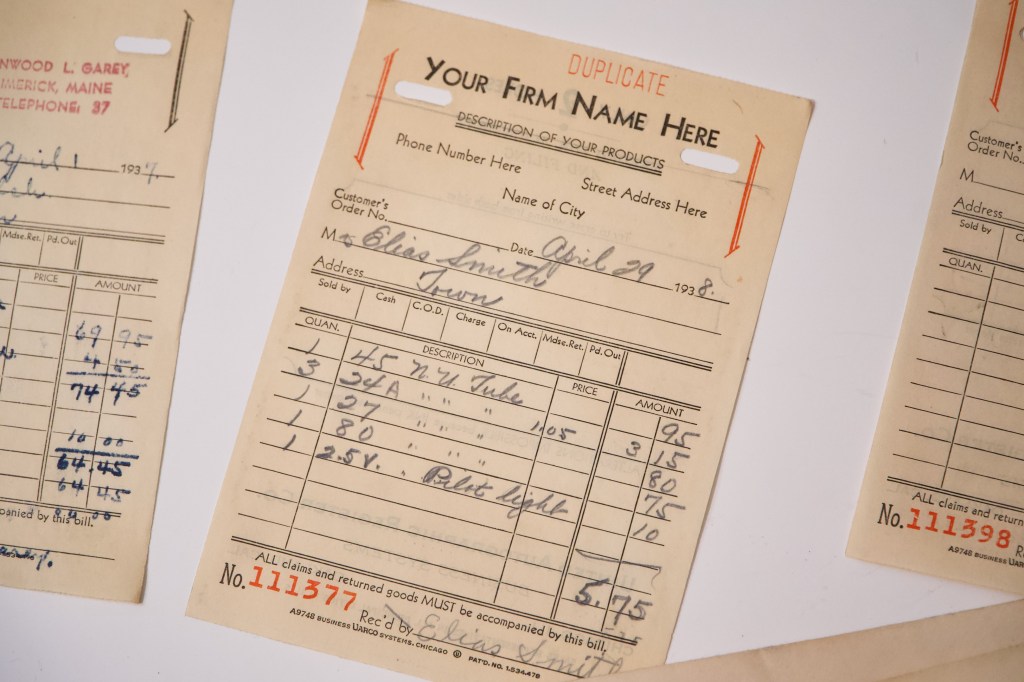

And folded neatly amongst them was a perfectly-preserved letter from a UARCO salesman dating back to 1941-what a discovery!

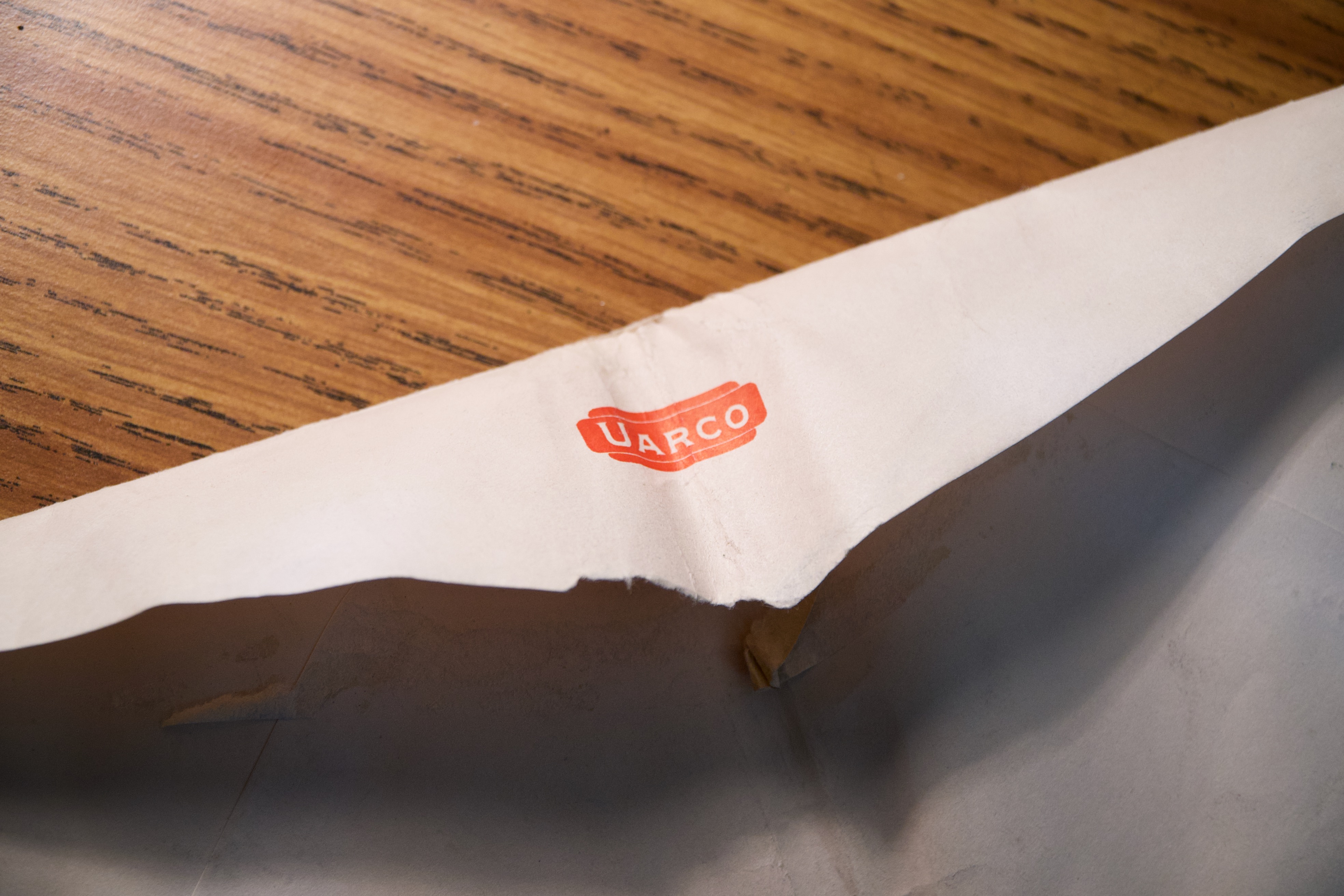
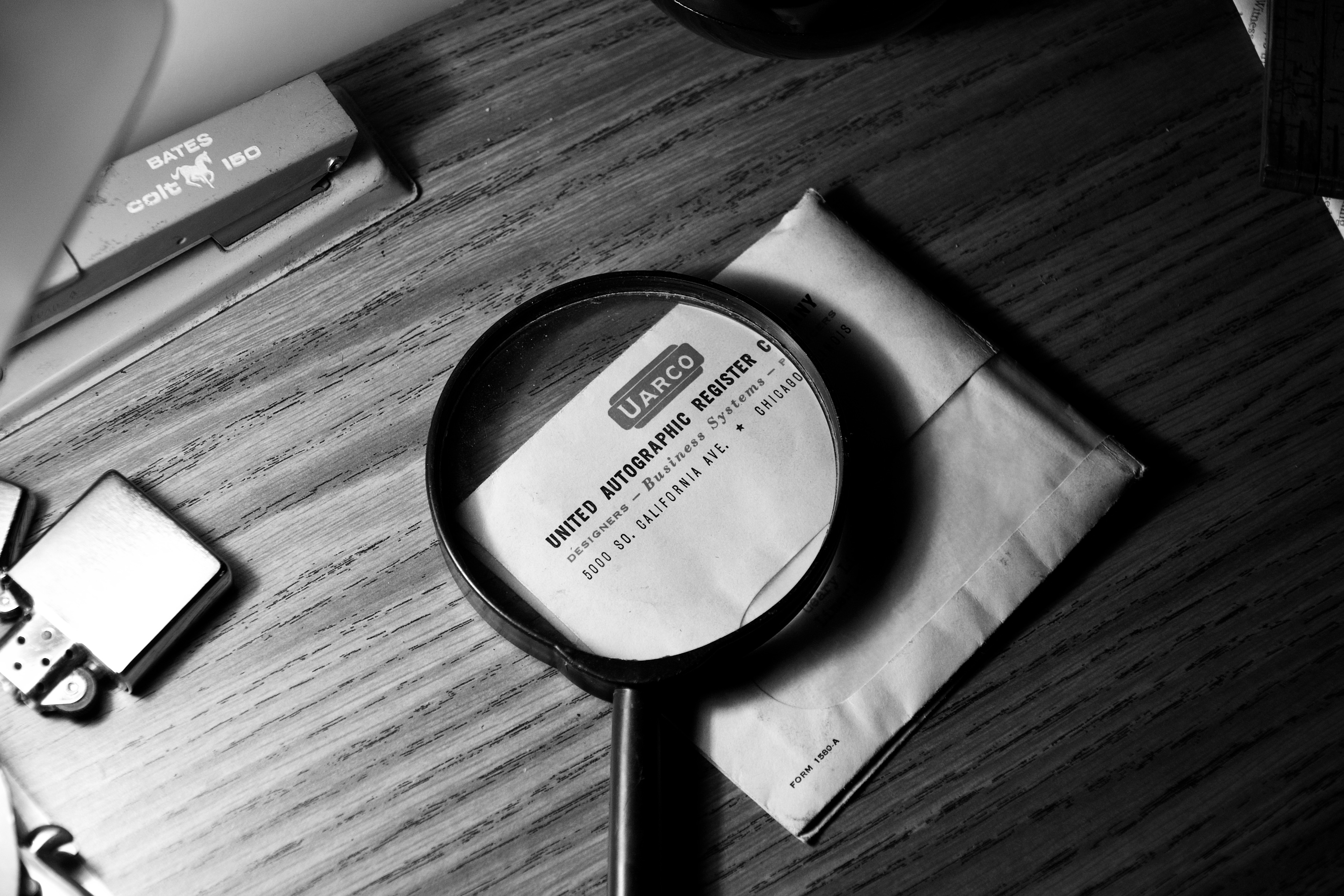

And the letter (which I have transcribed below) is addressed to the same name as the one stamped on the receipts/invoices: ‘GAREY LINWOOD’ of Limerick, Maine.
START OF TRANSCRIPTION
Hemlock 9000
5000 South California Avenue
Chicago, IllinoisOctober 30, 1941
Geary Linwood
Limerick, Me.Gentlemen:
May we lend a helping hand?
As you folks know, right at the moment there is no regular Uarco representative in your city. We’re doing our level best to find a good man to serve you, but we’ll not be satisfied until we find a fellow whom we feel will do a mighty fine job. In these defense days, it sometimes takes a little longer to find the right fellow than it did before.
That’s why we’d like to lend a helping hand from our Chicago Office. In every way, we are ready to serve you just as our representative would. We’ll gladly give you quotations on forms, give you full information about our different machines, draw up finished sketches for any additional systems you might use, or outline systems which may be extremely helpful to you. All these services, of course, are without any cost or obligation on your part.
So, next time you need help on forms for your Uarco register, would you drop a line to us here at Chicago? We’ll get busy on it right away, give you full facts and information, and help you all we can.
Incidentally, if you would direct your letter to me personally, I’ll see to it that it gets every attention which we can possibly arrange for you.
May we help you now?
Cordially yours,
Don Mack
Sales Promotion Mgr.
END OF TRANSCRIPTION
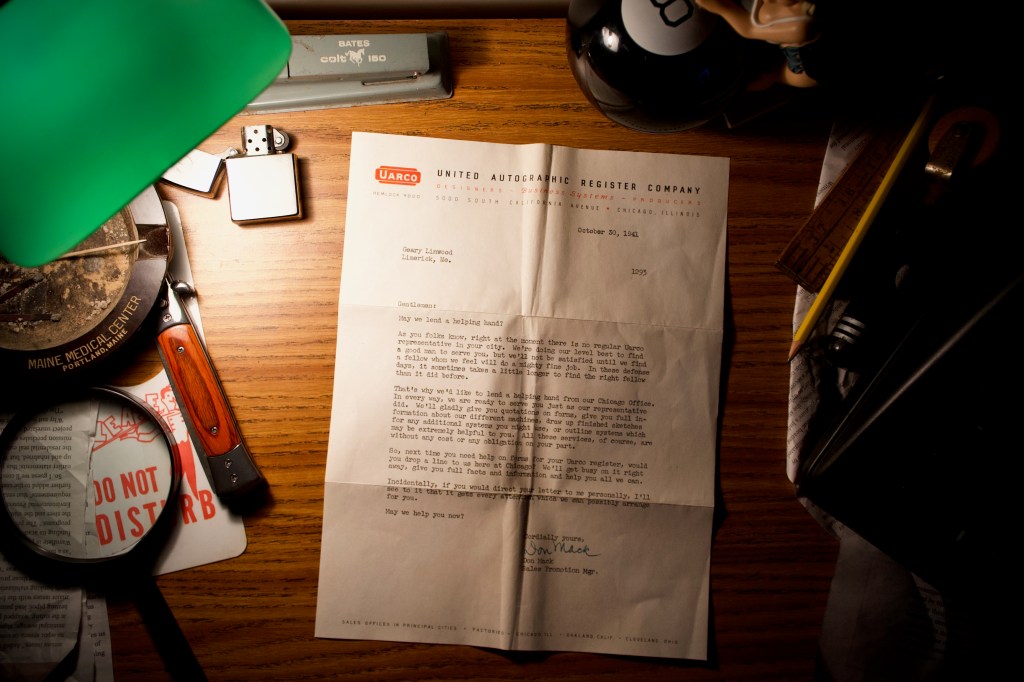
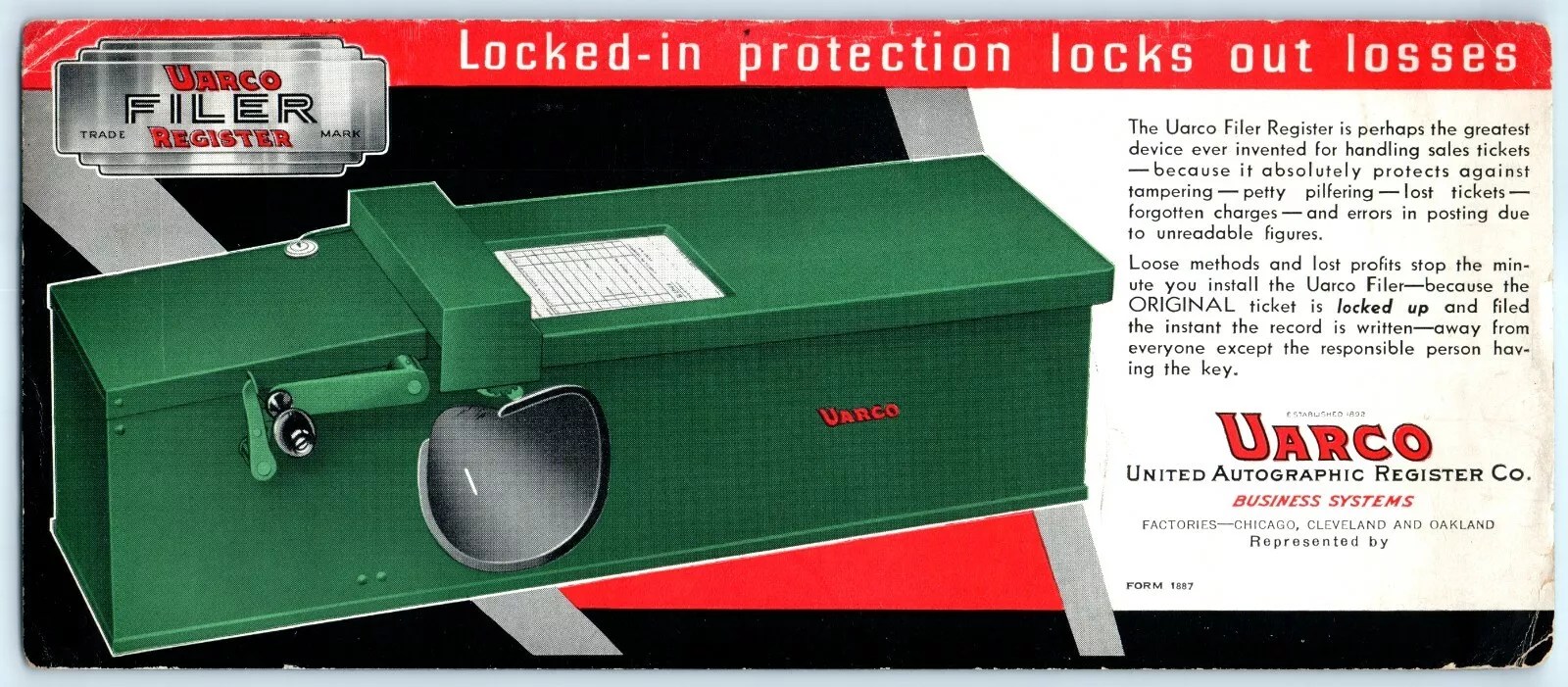
Needless to say, the eighty four year-old letter from then UARCO employee Don Mack, along with the cache of preserved invoices floored me. Aside from a few vintage advertisements I found online (pictured below), I could not find much else on the specifics of the various models of business systems (autographic registers) that UARCO produced…

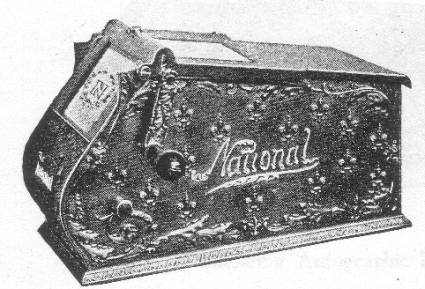
…although I did find a handful of promising eBay listings (pictured below) of similar UARCO-brand autographic registers. While a few appeared similar, nothing seemed to be an exact match to the item/model that I have.
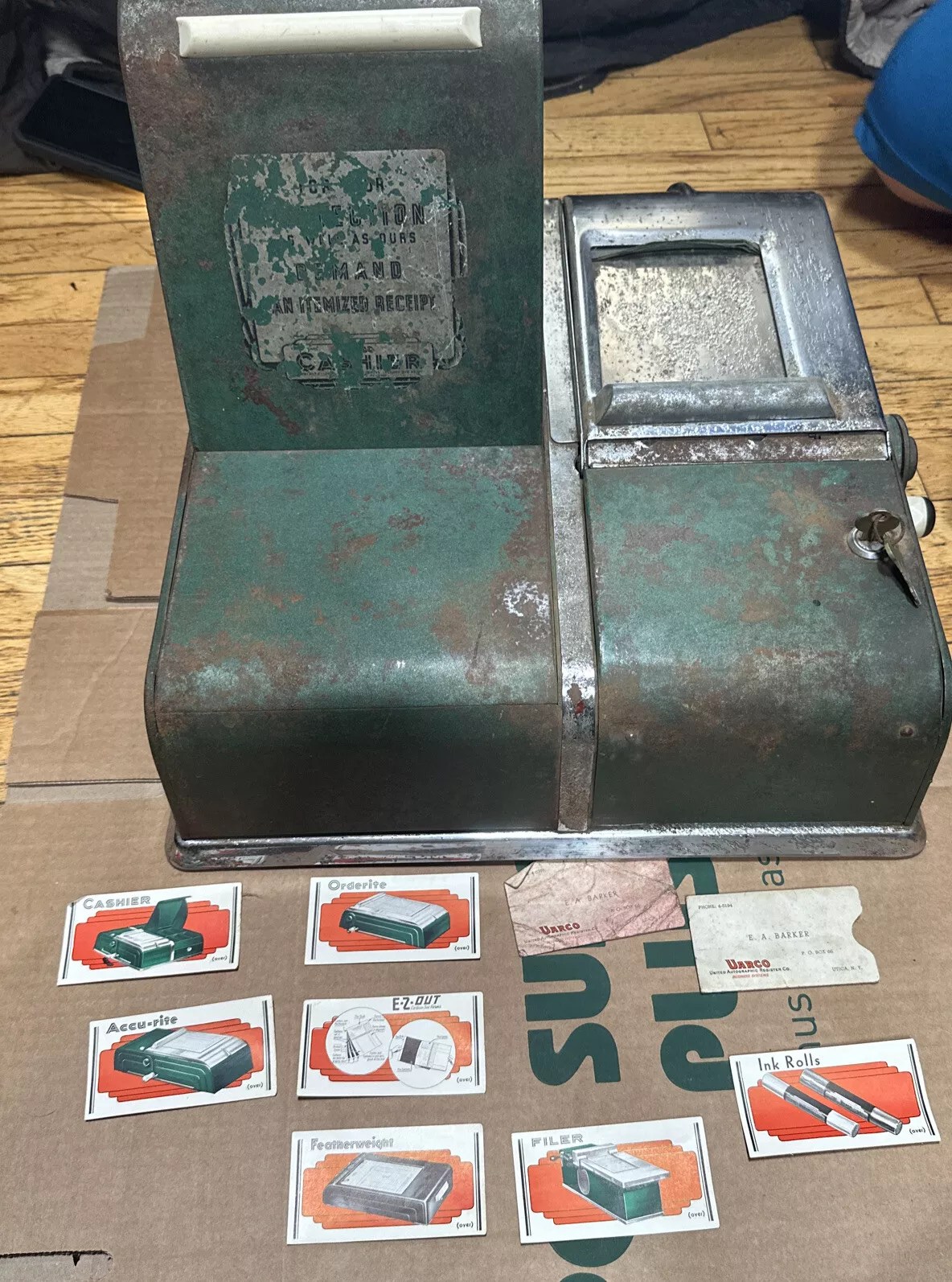


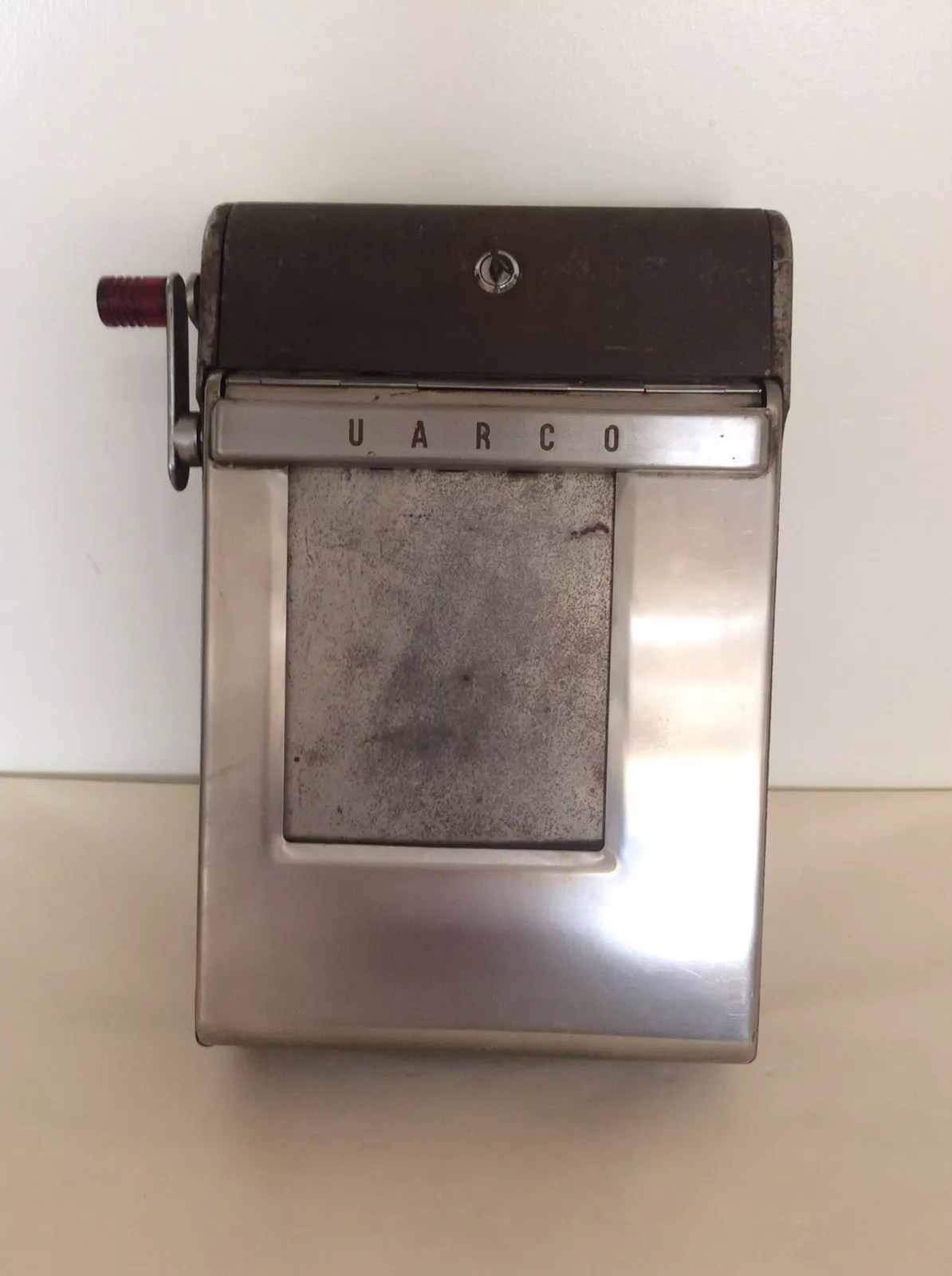


This discovery brought me to Facebook (or is it Meta now? I can never keep up) where I continued researching this UARCO-brand ‘featherweight recorder’.
Eventually I came across a public group on the popular social-networking platform made up exclusively of former UARCO-staff and affiliates from various era’s of the company’s history. I shared with them the item in question, as well as the letter from the sales promotion-manager and the photos you see here, hoping that their connection with the company would shed more light on this peculiar machine and the items found within.
What I learned from my inquiry with the UARCO-alumnus was that the company, despite its eventual buyout and more-or-less dissolvement, was a great place to work. One group member said that UARCO was kind toward its staff, saying (UARCO) was, “the best. Family oriented.”
Numerous individuals in the group commented on my post, citing that they worked with or had seen similar autographic registers during their time at the company. One former employee mentioned, “I recall seeing pictures of guys with their autographic registers strapped to the side of the hood(s) of their car”!

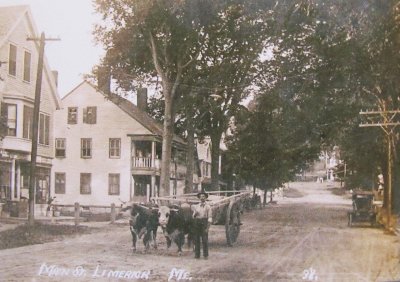
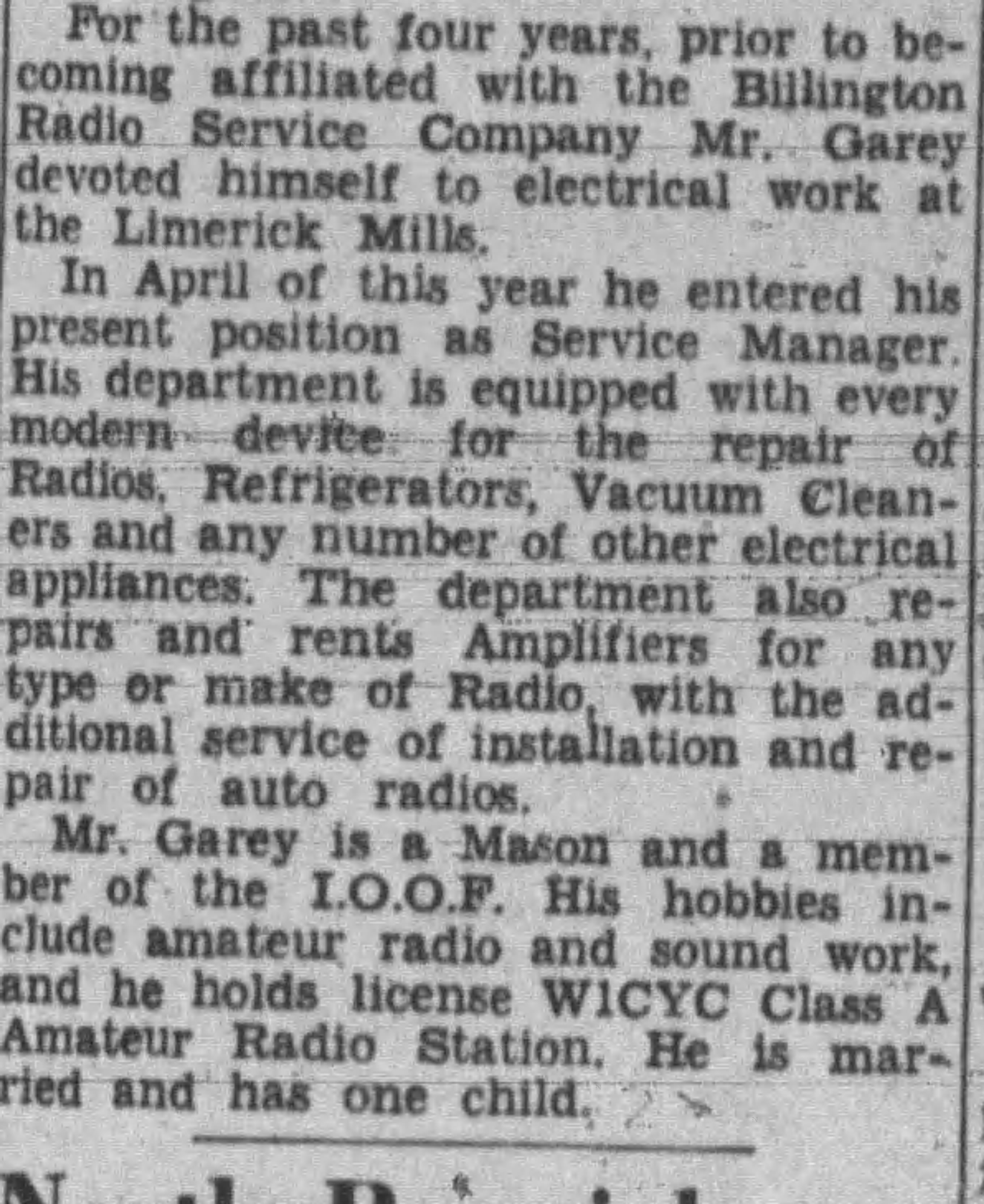
After searching through the digital archives of a few Maine-based newspapers, I discovered that Linwood L. Garey (the spelling of ‘GEAREY’ as his surname on the letter I found is likely a typo) was: an active community member, a Tower Oil Burner dealer/salesman for Limerick, former lineman, Mason and I.O.O.F member (Independent Order of Odd Fellows), and radio engineer from Limerick, Maine.
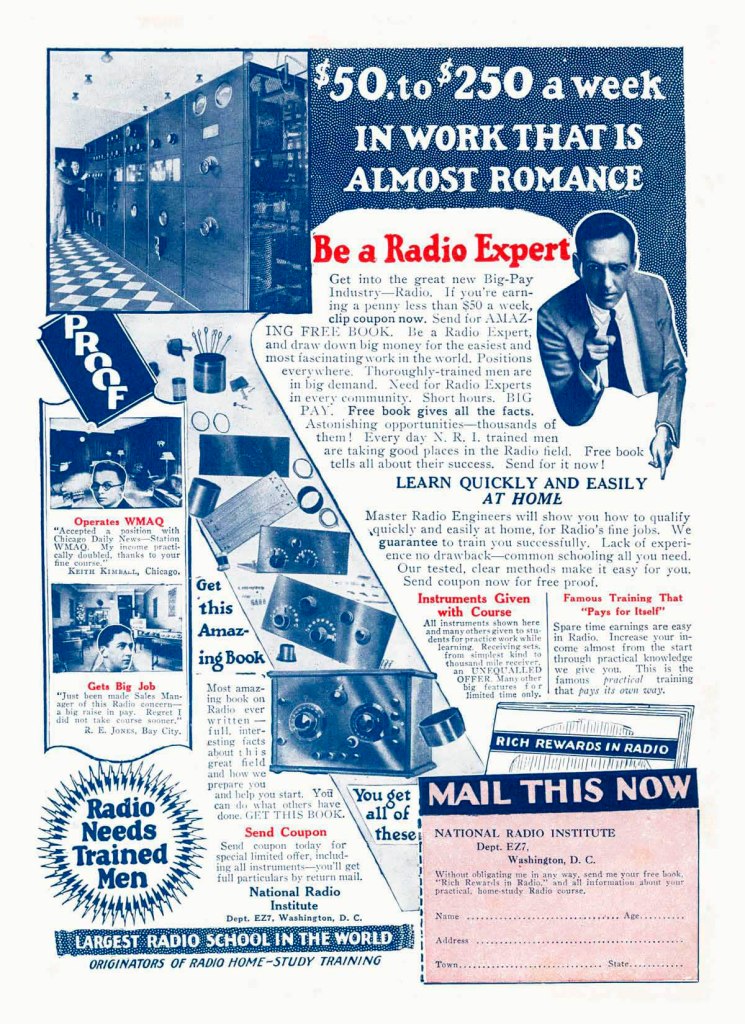
He graduated from the National Radio Institute in Washington D.C.-a private institution which taught students how to become radio operators and technicians-and briefly lived in Portland before relocating to Everett, Massachusetts to work for the WBZ Boston radio station.

Garey passed away at just 40 years old on September 13th, 1943, leaving behind a wife and daughter. Below I will include some of the newspaper clippings I found which mention him:
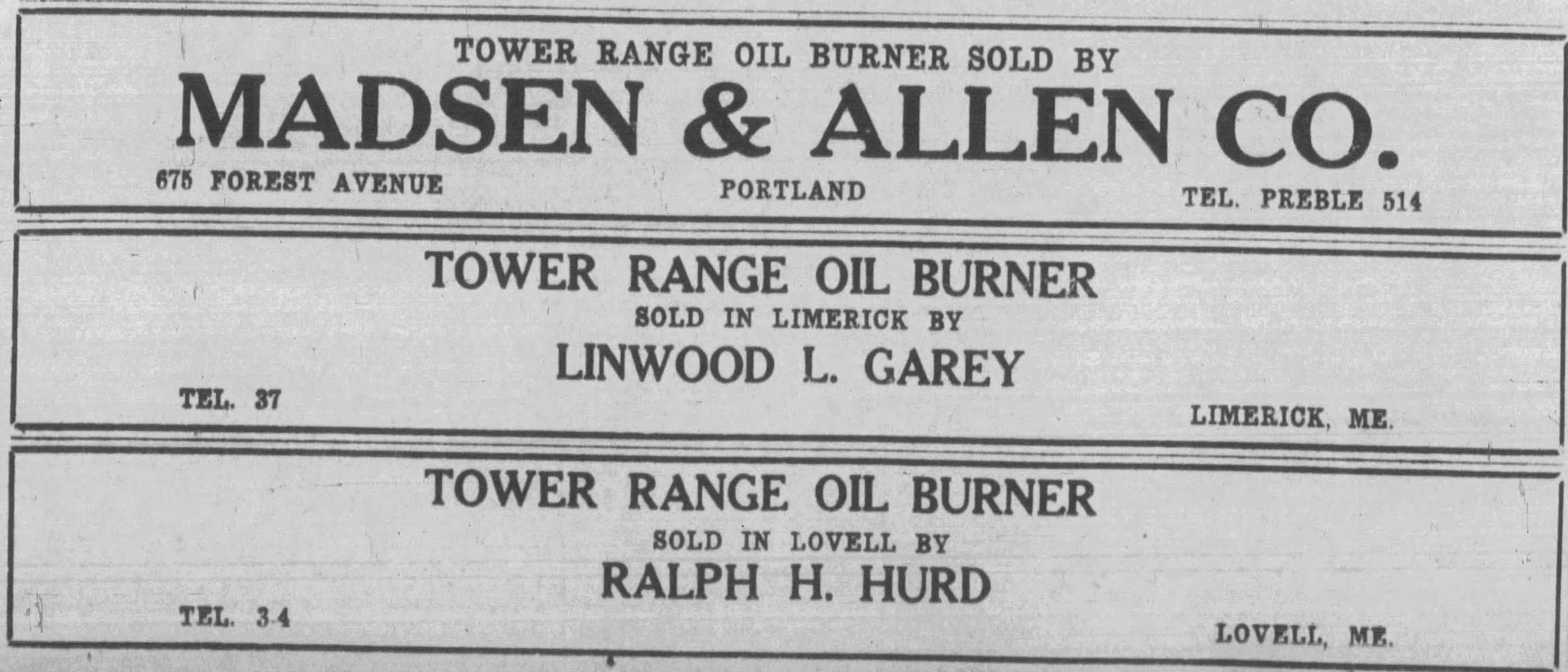
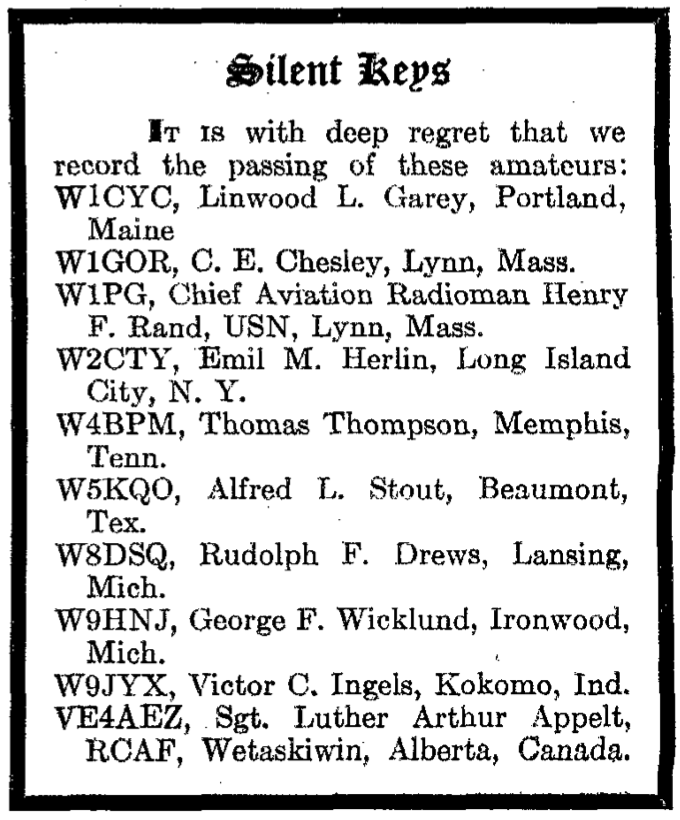
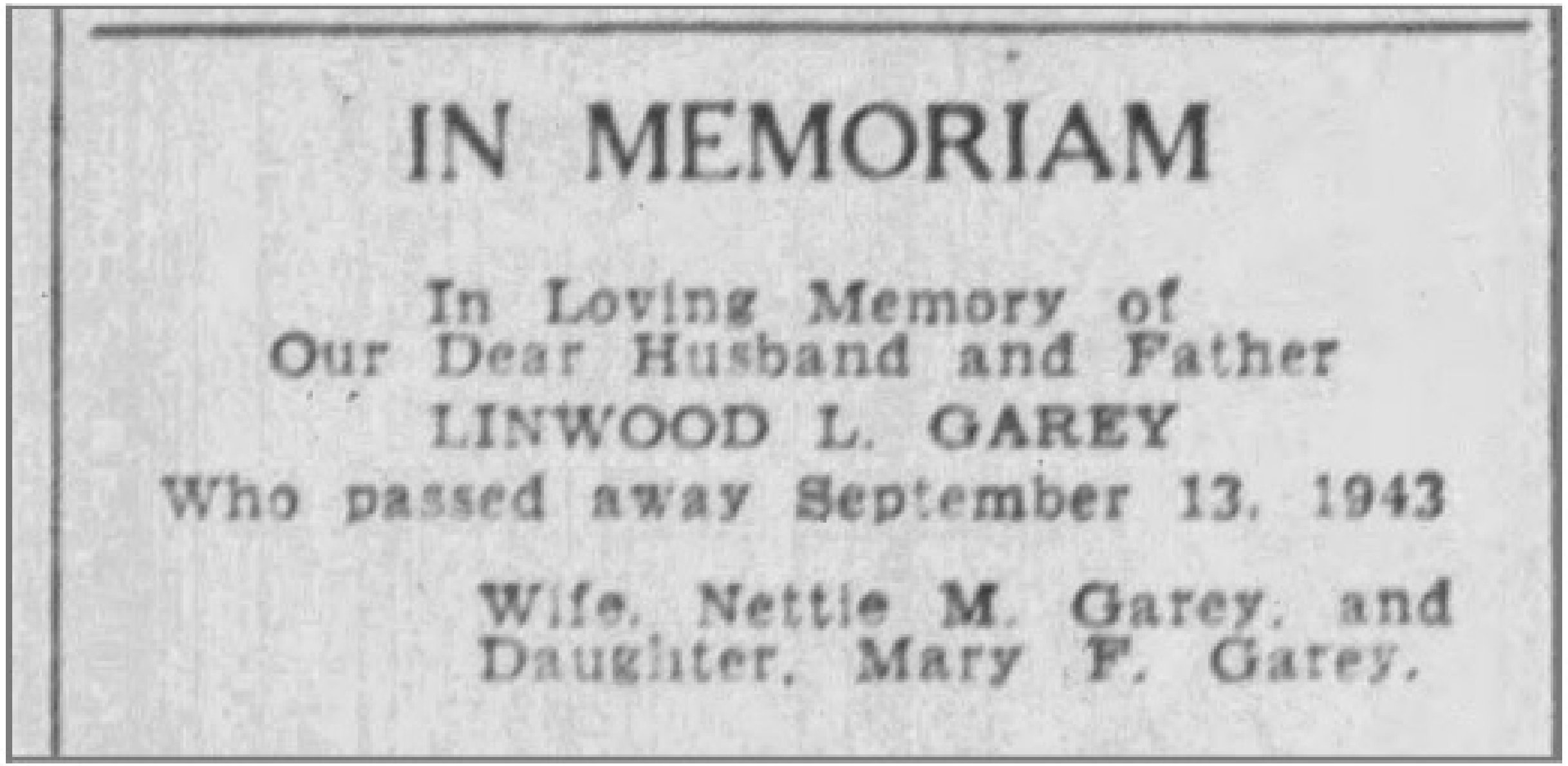
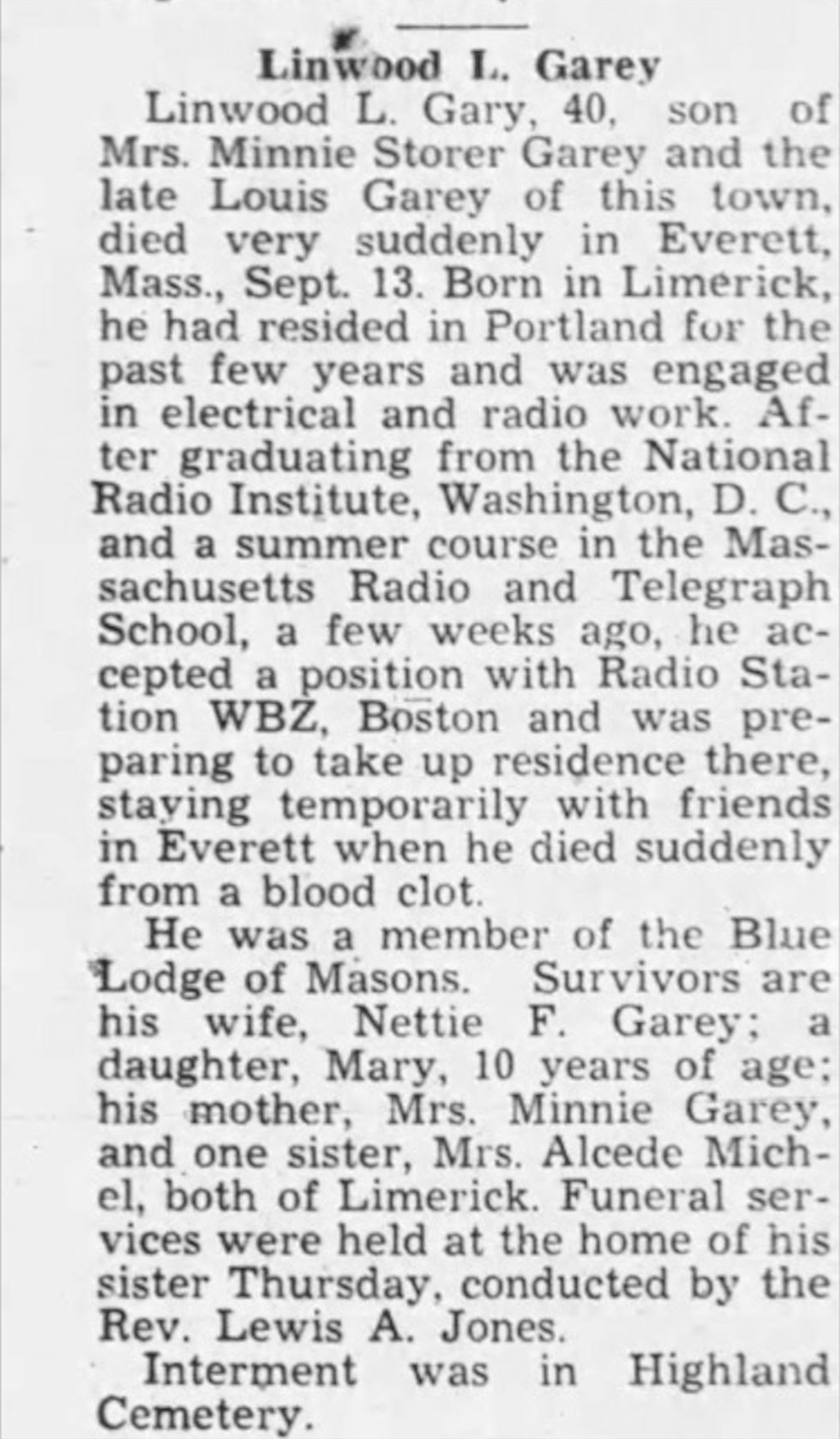
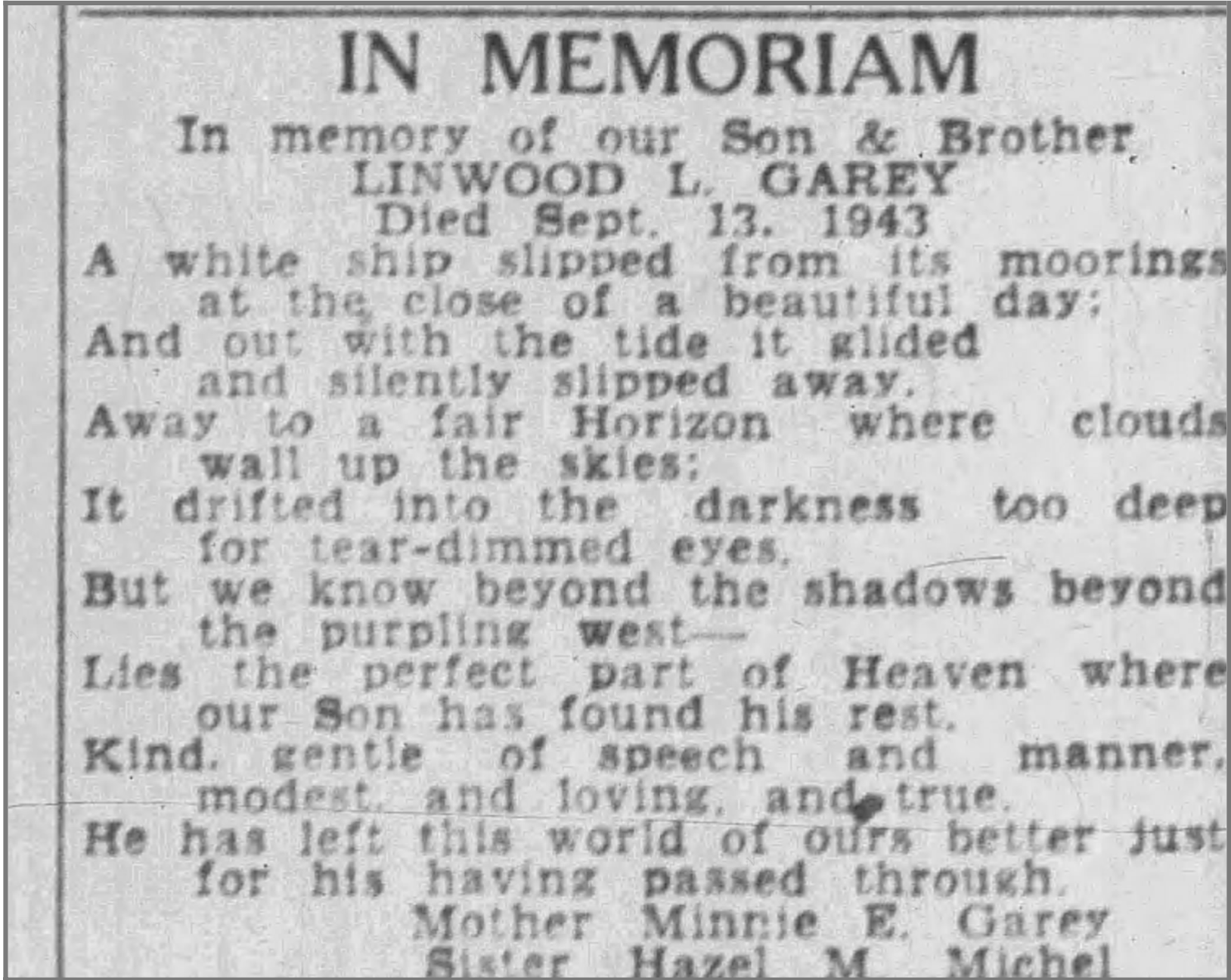
From what I have gathered, this nearly mint-condition UARCO featherweight recorder I was gifted most likely once belonged to the very same Linwood L. Garey (pictured below.) It was likely used in his business and personal travels, and was probably sold-off by family after his passing.
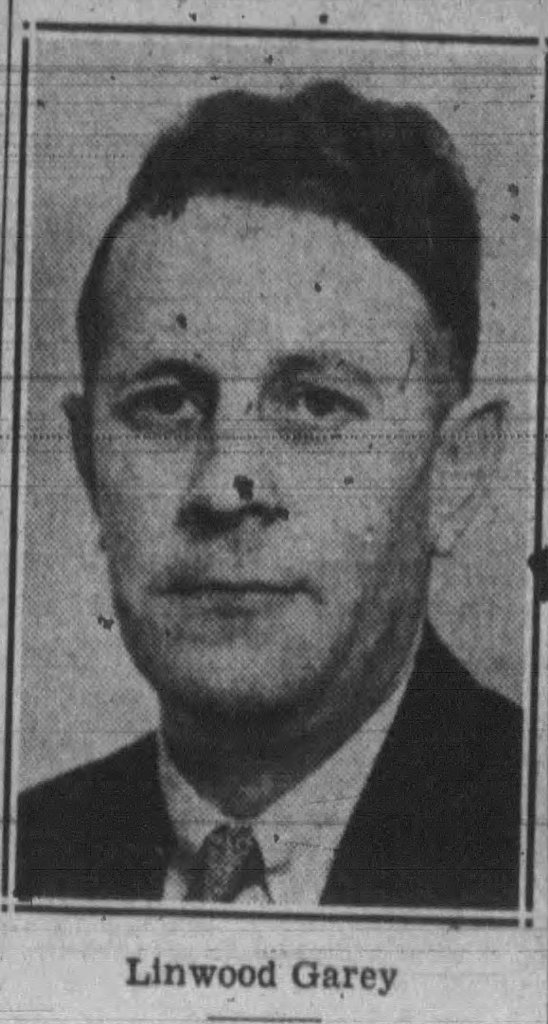
I should note, it is exceptionally rare that when researching an antique item such as this one that I discover the identity of the original owner. Usually vintage finds change hands countless times after they are brought to a thrift store or sold off, so to have learned not only what this unique business tool does, but also who used to own it and where he lived and worked (less than an hour from where I grew up) is truly a stroke of pure luck.
Check out the full video for the UARCO Featherweight Recorder below:
Thanks for reading!
-Thrifty G
P.S. If you have any additional information on the UARCO autographic register known as the ‘Featherweight Recorder’, or the individual who I believe to have owned it (Linwood L. Garey of Limerick, Maine), please contact me.
As always, I’d love to learn more!


Published: 7/7/2025
…

